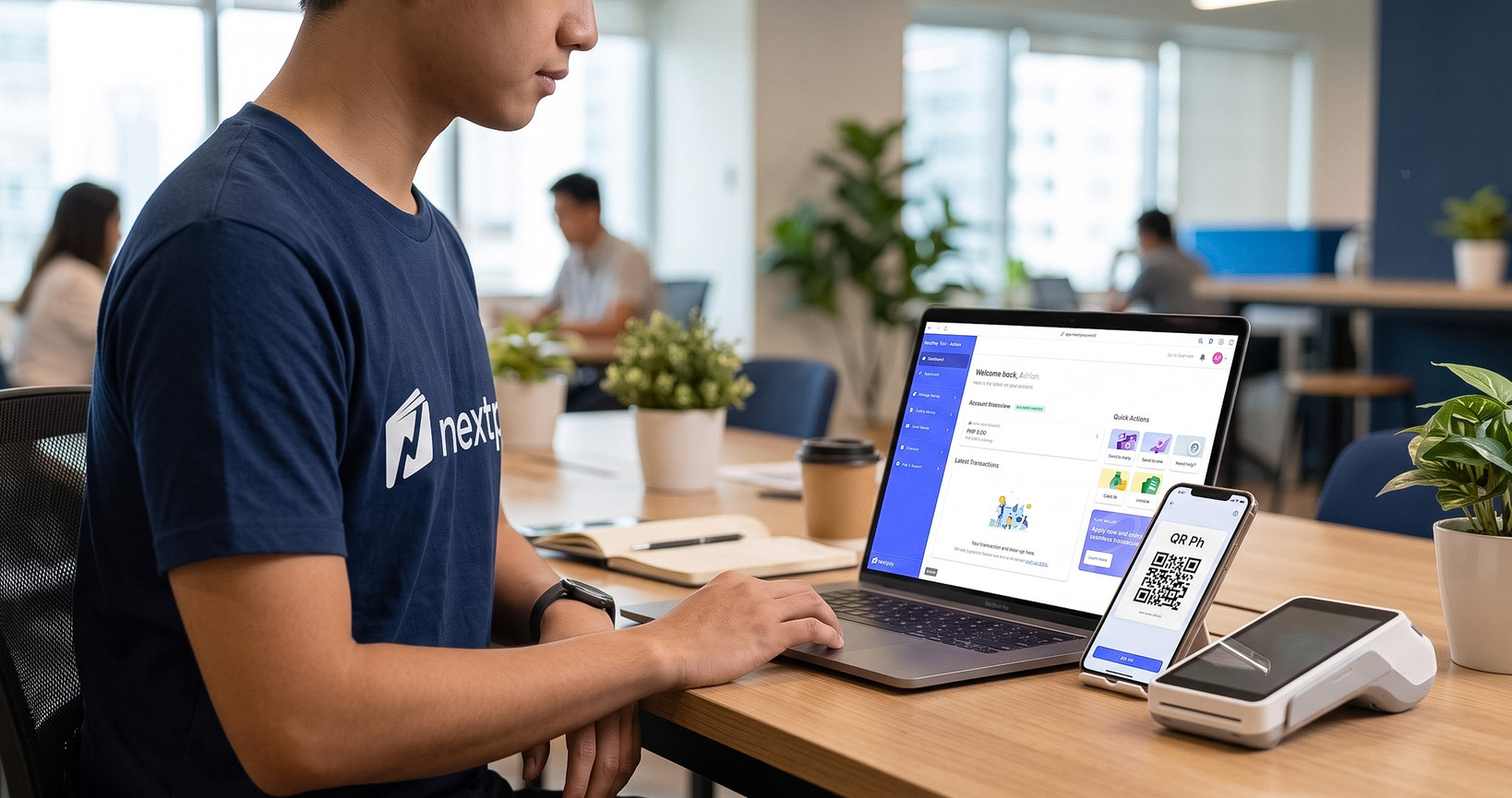
Seven years ago, we set out to fix something specific. A growing Philippine business should not have to survive weeks of bank onboarding, a high maintaining balance, and a same-bank payroll restriction just to pay its people and collect from its customers.
Seven years later, NextPay is the financial infrastructure thousands of Philippine businesses run on. This is our first half-year update: where NextPay stands at the midpoint of 2026, what changed, and what we are building next.
Seven Years in
Since day one, businesses have moved ₱30.1B+ through NextPay, across 1.7M+ transactions. That figure is the sum of many ordinary but important moments: a payroll that landed on time, a supplier who stopped asking where the payment was, a platform that collected from its users and paid its merchants from the same place.
The First Half of 2026
In the first half of 2026, businesses moved ₱7.56B through NextPay, more than double (+113%) the ₱3.55B they moved in the same period in 2025.1
Money Moved (GTV) Over Time
That momentum shows up day to day. Businesses now move an average of 3,629 payments a day through NextPay, up from 1,033 a day in the first half of 2025, roughly three and a half times as many.
Average Daily Transactions Over Time
To put that in context, ₱7.56B is roughly a full month of pay, at Metro Manila’s ₱695 daily minimum wage, for more than 400,000 workers.
Today, growing businesses across the Philippines run on NextPay to pay their people and suppliers and to collect from their customers, reaching any bank or e-wallet those people already use.
1 “Money moved,” or gross transaction value (GTV), is the total value of payments businesses processed through NextPay. It is the money our customers moved, not NextPay’s revenue.
Built on Regulated Rails
Trust is the whole job when you move other people’s money.
NextPay is a BSP-registered Operator of Payment System, listed on the BSP’s official registry. The platform is independently penetration-tested by Secuna, and we are a Y Combinator company (W21).
Trust also shows up in how businesses rate the service they get. NextPay’s customer satisfaction score is 86.9%, measured across every support interaction and above the industry average. In 2025, we were a Silver winner for Customer Experience Excellence at the KMC Startup Awards.
A New Home at nextpay.ph
Our website has a new address: nextpay.ph. A Philippine fintech, on a Philippine domain.
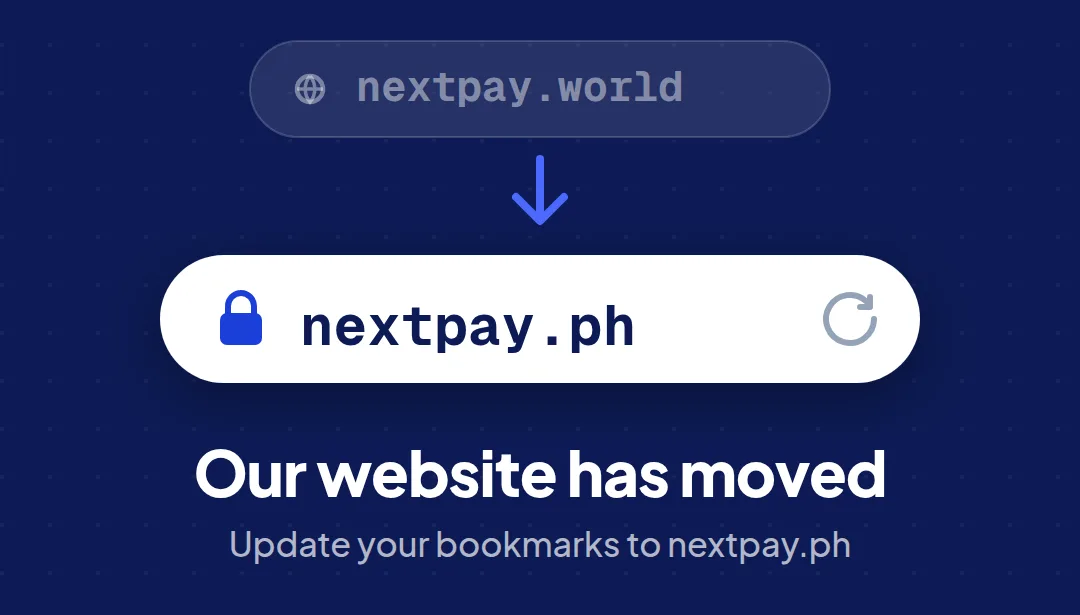
This is a website move. It is not a rebrand, and it is not a change to your account. If you have nextpay.world links saved, they still work and redirect automatically. Update your bookmarks when you get the chance.
Same company, same BSP-regulated infrastructure, same services. Your apps, logins, developer docs, and support all stay exactly where they are, on nextpay.world. Only our website address has moved.
What We are Building Next
We are widening how money moves for Philippine businesses, beyond payroll, invoicing, and our API.
A lighter way for solo professionals and small service businesses to get paid. Create a bill, share a payment link, and let reminders handle the follow-up, so you are not the one chasing.
NextPay at the counter. Accept cards and QR Ph on one device, with every branch reconciled in one dashboard.
If any of this fits how your business gets paid, book a demo and we will map it to how you already move money.
Year Seven
Every half has been bigger than the last: ₱3.55B, then ₱5.50B, then ₱7.56B. Those are not our numbers. They belong to the thousands of Philippine businesses that run their money on NextPay, and that pay more people and suppliers through it every day.
We set out to give any growing business here the money movement that used to be out of reach for smaller companies. Seven years in, thousands run on it, and more join every half.
To every business and partner who has moved money with us: thank you. The most important half is always the next one. We will see you there.